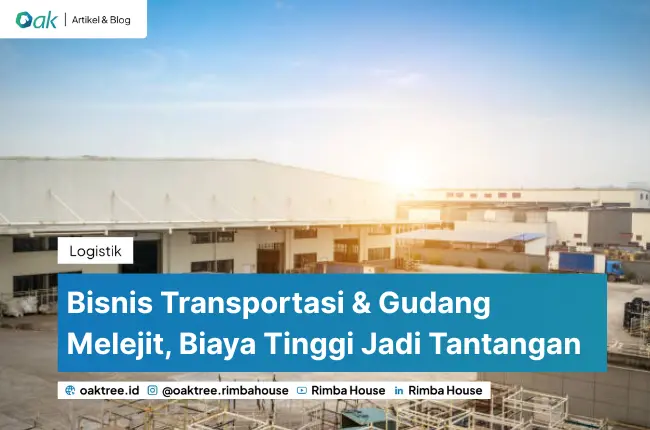
Transportation & Warehousing Business Soars, High Costs Pose a Challenge
 Oaktree.id4 min read
E-commerce growth, rising demand for fast distribution, and expanding supply chain networks have driven transportation and warehousing businesses in Indonesia to grow rapidly in recent years. According to a report by the Ministry of Transportation, the national logistics sector recorded an increase in shipping volume of more than 35% in 2025. This growth underscores the vital role of transportation and warehousing as the backbone of the digital economy.
However, behind this growth are significant challenges that cannot be ignored: rising operating costs. Surging fuel prices, limited storage space, and workforce efficiency are among the main factors affecting company profitability. As a result, many industry players are turning to digital transformation as a strategy to reduce costs and improve the efficiency of their logistics business processes.
Growth of the Transportation & Warehousing Business
Transportation and warehousing have become strategic sectors that play an important role in supporting the national supply chain. A surge in online shopping and increased export-import flows are driving demand for fast delivery services and efficient goods storage. This makes the logistics sector the backbone of smooth goods distribution in the era of commerce.
Today’s logistics companies are expected not only to deliver goods faster, but also to provide full transparency at every stage of the shipment. To meet this challenge, many operators are beginning to adopt digital management systems that enable real-time tracking, shipping, and inventory management.
Meanwhile, warehouse modernization continues to advance with the adoption of technologies such as automated storage systems and robotic picking, which improve delivery speed and accuracy. This digital transformation strengthens the competitiveness of Indonesia’s logistics industry and prepares it to meet the increasingly fast-paced and complex dynamics of the global market.
Impact of Rising Operating Costs
Although the transportation and warehousing sectors continue to grow, the biggest challenge they face is rising operating costs. Some of the main contributing factors include:
- Rising Energy Prices
The cost of fuel, electricity, and alternative energy has risen significantly. This directly affects transportation costs, fleet operations, and warehouse operations, especially those requiring refrigeration, lighting systems, and heavy equipment. - Limited Availability and Rising Prices of Strategic Land
Land for warehouses and distribution centers in strategic areas, such as industrial zones and locations near ports, is becoming increasingly scarce. As a result, rental prices are soaring, driving up overall logistics costs, including last-mile distribution costs. - Shortage of Skilled Logistics Workers
Technological advancements and automation require a workforce that understands digital systems and data-driven management supply chain Unfortunately, skilled professionals are still in short supply, so companies need to invest more in training and recruitment. - Reliance on Manual, Non-Digital Systems
Many small and medium-sized businesses still use traditional management methods. Manual systems lead to low efficiency, delays in recordkeeping, and a high risk of errors in operational processes, ultimately increasing indirect costs. -
Global Supply Chain Disruptions and Inflation
Fluctuating raw material prices, international shipping delays, and global inflation are adding to cost pressures. This is driving up logistics rates, vehicle maintenance costs, and administrative expenses.
[irp posts=”1745″ ]
Digital Transformation for Logistics Efficiency
Faced with competition and ever-increasing operational costs, many companies are now turning to digital transformation in the logistics sector. These systems offer a range of strategic benefits, including:
- Real-Time Monitoring
With the support of IoT sensors and digital dashboards, companies can monitor the movement of goods, fleet conditions, and delivery status in real time. This helps prevent overstocking and stockouts while improving on-time delivery and customer satisfaction. - Distribution Route Optimization
System Transportation Management System (TMS) can automatically analyze the best routes based on traffic conditions, distance, and fuel consumption. As a result, transportation costs become more efficient and delivery times are reduced. - Minimize Human Error
Automation of recordkeeping, Tracking, and shipping document creation reduces reliance on manual data entry. This not only improves data accuracy but also speeds up logistics workflows from the warehouse to the end customer. - AI-Based Data Analysis
AI technology provides predictive analytics to assess operational performance, forecast market demand, and identify potential logistics risks. This enables faster, more accurate, data-driven business decisions. - Improved Business Competitiveness
Digital transformation helps companies adapt to market changes, reduce costs, and provide more responsive service. In the era of Industry 4.0, digitalization is not just an added advantage—it is essential to the sustainability and growth of logistics businesses.
[irp posts=”2366″ ]
Conclusion
The growth of the transportation and warehousing businesses reflects the huge potential of Indonesia’s logistics sector. However, without the right efficiency strategies, high operating costs can become a serious obstacle to growth. Digital transformation is the most effective way to address these challenges, as it can improve accuracy, speed, and transparency across every logistics process.
As a solution, Oaktree.id serves as a strategic partner for companies looking to optimize their logistics and distribution systems. With its integrated management system, Oaktree helps businesses monitor inventory, manage shipments, and analyze costs in real time, making operations more efficient, measurable, and competitive.