


In inventory management, the order in which goods enter and leave the warehouse must be carefully considered to keep stock under control. Two commonly used methods are FIFO (First In, First Out) and LIFO (Last In, First Out).
Both methods determine which items are prioritized for removal from storage. The difference may seem simple, but its application can affect how a company manages inventory, inventory costs, and even the risk of goods sitting in storage for too long.
What Is FIFO?
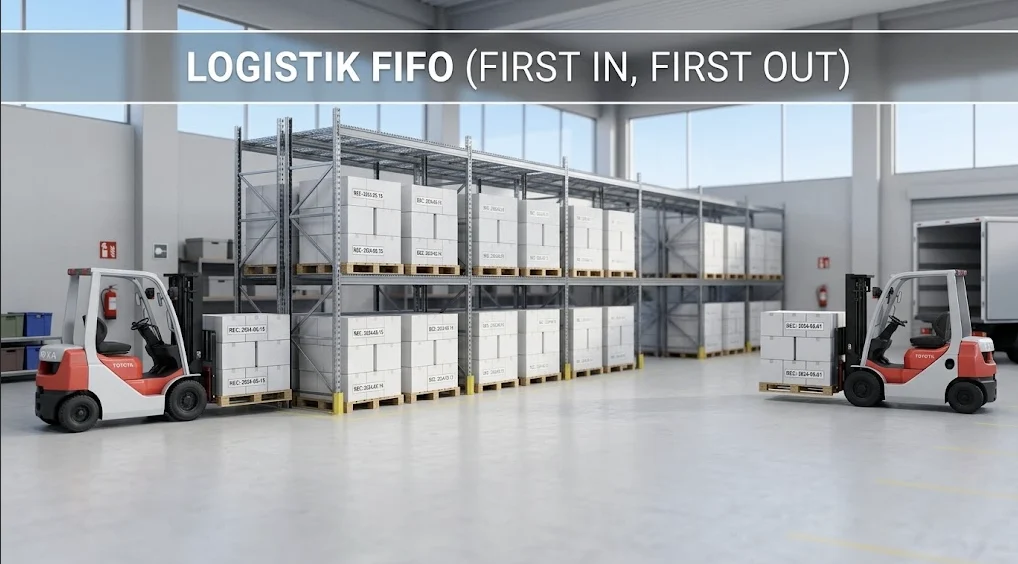
FIFO is an inventory management method that dispatches goods based on the order in which they arrived. Goods that arrived first are prioritized for use or shipment first.
For example, a warehouse receives:
- 100 units of product on August 1
- 100 units of product on August 5
- 100 units of product on August 1
When an order for 100 units comes in, the stock from August 1 is dispatched first.
This concept is suitable for goods with a limited shelf life because products that have been in the warehouse longer are not allowed to remain there for too long.
Example of FIFO in Logistics
A food distributor receives three batches of milk at different times. When a customer places an order, the staff retrieves the batch that arrived first.
With this method, inventory moves in sequence:
Older items → shipped first → newer items remain in storage.
Implementing FIFO is usually easier if the storage location and inventory tracking system support identification based on receipt date or batch.
What Is LIFO?
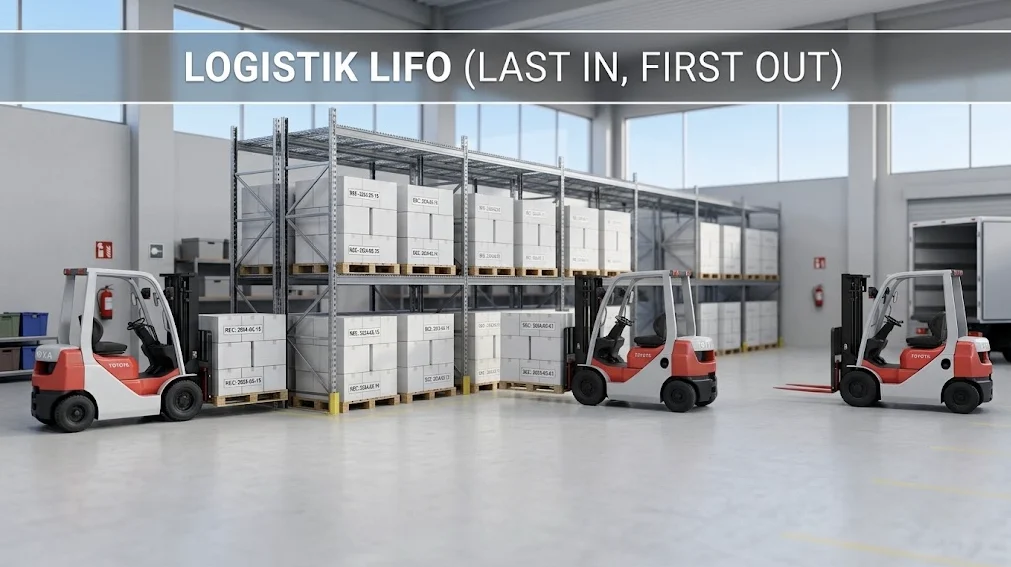
LIFO is an inventory method that dispatches the goods that were received last first.
If a company receives goods in three batches:
Batch A → Batch B → Batch C
then when goods are issued, Batch C is the first priority.
This method is easier to apply to goods that are not perishable and can be stacked without compromising quality or access to the goods.
An example is certain construction materials. Newly arrived goods can be placed on top of the stack and then retrieved first when needed.
However, its implementation must be tailored to the characteristics of the goods and the storage design. For products with expiration dates, this approach can increase the risk of older goods being left behind in the warehouse.
Differences Between FIFO and LIFO
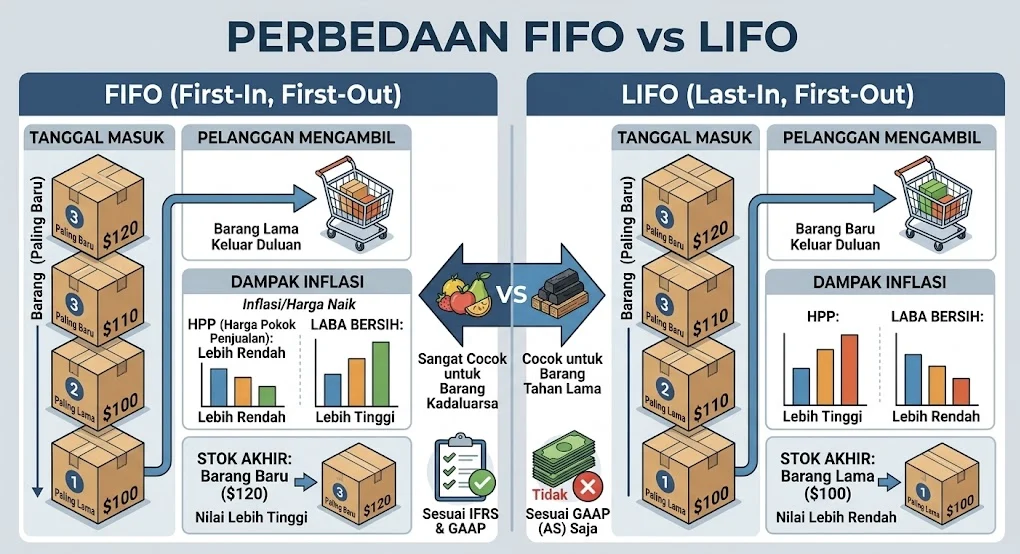
The main difference between the two lies in the order in which the goods are dispatched.
| The | FIFO | LIFO |
|---|---|---|
| Acronym | First In, First Out | Last In, First Out |
| Items that go out | Entered first | Entered last |
| Priority | Old stock | Newest stock |
| Suitable for | Items with a limited shelf life | Items with a relatively long shelf life |
| Risks of old inventory | Lower | Higher |
| Simple pattern | First-in, first-out | Last In, First Out |
So, while FIFO uses the “first in, first out” principle, LIFO uses the opposite principle.
The easiest way to understand these two methods is through a simple example.
Imagine a warehouse storing three batches of products:
January → February → March
If FIFO is used, the January items are shipped first, followed by February, then March.
If LIFO is used, the March items take priority, followed by February and January.
This difference becomes important when a company has many batches of goods and needs to maintain order in inventory movement.
FIFO, LIFO, and FEFO: What’s the Difference?
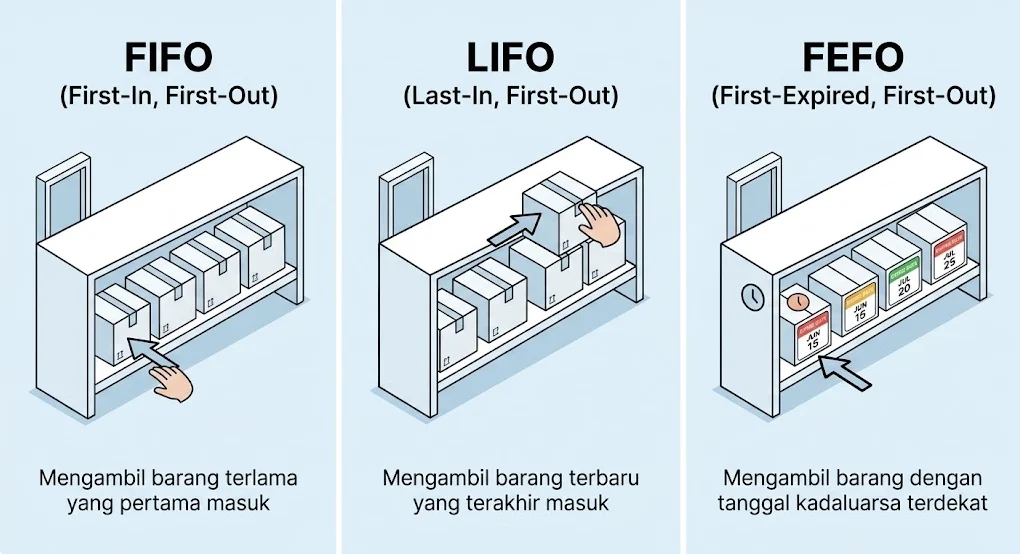
In addition to FIFO and LIFO, there is FEFO (First Expired, First Out), which is widely used for products with expiration dates.
The principle is different:
- FIFO: goods that come in first are shipped out first.
- LIFO: goods that enter last are shipped first.
- FEFO: goods with the nearest expiration date are shipped first.
For example, a warehouse has two batches of medicine:
| Batch | Date Received | Expiration Date |
|---|---|---|
| A | August 1 | December 2027 |
| B | August 10 | October 2027 |
Although Batch A arrived first, Batch B is prioritized because its expiration date is closer.
This is why FEFO is more relevant for products such as medicines, food, beverages, certain cosmetics, and other items with a limited shelf life.
FIFO and FEFO in Pharmacy
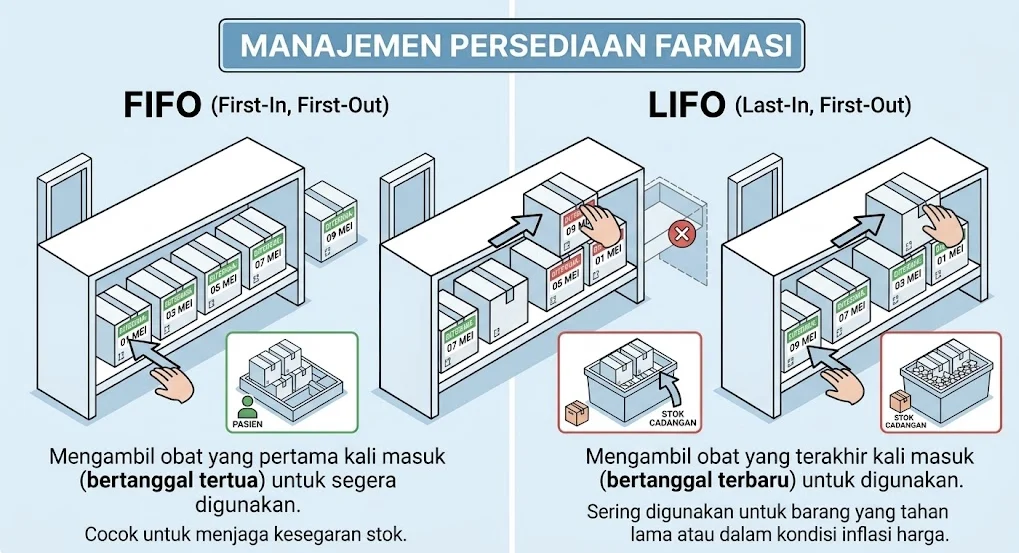
In the pharmaceutical industry, inventory management must take expiration dates into account. Therefore, FEFO is often more relevant than simply considering the date of receipt.
For example, a pharmacy may receive medications at different times, but with varying expiration dates. Products with the nearest expiration date must be prioritized for distribution in accordance with applicable procedures.
Thus, FIFO and FEFO have different prioritization criteria:
FIFO considers the date of receipt, while FEFO considers the expiration date.
The choice of method must align with the product characteristics and the company’s inventory management procedures.
FIFO and LIFO in Warehouse Management
Inventory methods do not stand alone. Their implementation must be supported by clear operational processes.
Some points to consider include:
#Item Placement
Storage locations must allow staff to retrieve inventory in the specified order.
#Batch Identification
Products with different batches or receipt dates must be clearly distinguishable.
#Inventory Recording
Every item received and shipped must be recorded so that the inventory sequence can be tracked.
#Warehouse System
In warehouses with high transaction volumes, a digital system can help determine which inventory to retrieve based on the rules in use.
FIFO, LIFO, and Average in Inventory
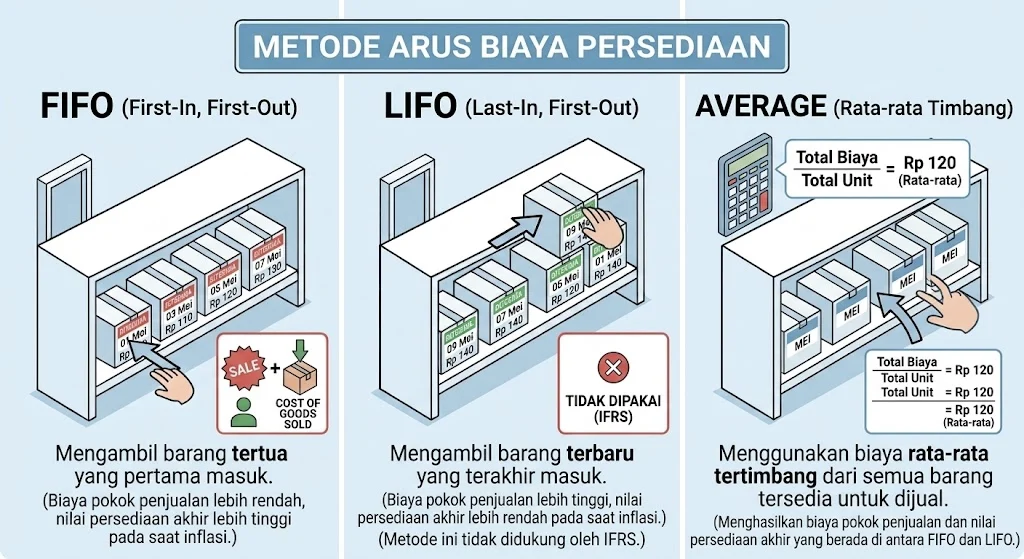
The terms FIFO, LIFO, and Average also frequently come up in discussions of inventory valuation. However, their context must be distinguished from the method of physically issuing goods.
FIFO and LIFO establish assumptions regarding the order in which goods are used or sold. Meanwhile, the Average method uses the average cost to determine inventory value.
A company purchases:
- 100 units × Rp10,000
- 100 units × Rp12,000
Under the average method, the cost per unit is calculated based on the average of these purchase costs.
In accounting practice, the methods that can be used also depend on applicable accounting standards and regulations. Therefore, discussions of inventory valuation methods should not be equated with the rules governing the physical removal of goods from a warehouse.
Want to See a More Comprehensive Selection of WMS Applications?
[oak_banner style="2" url="https://blog.oaktree.id/contoh-aplikasi-warehouse-management-system/?utm_source=blog&utm_medium=internal&utm_campaign=lifo_fifo_article" title="10 Examples of Warehouse Management System Applications for Warehouse Operations" cta="See the Differences"]
Every company has different warehouse management needs—ranging from inventory control and picking to integration with business systems. Check out some examples of WMS applications and understand the features you should consider before choosing the right system.
When to Use FIFO, LIFO, or FEFO?
There is no single method that works for all types of goods.
FIFO is a good choice when a company wants to ensure that older inventory moves first.
LIFO can be used under certain conditions for goods that are not perishable and can be safely stacked, although its implementation has operational limitations.
FEFO is more appropriate when expiration dates are the primary factor in determining dispatch priorities.
The most important thing is to tailor the method to the product’s characteristics, storage patterns, expiration risks, and distribution processes.
For products with expiration dates, FEFO is often the more appropriate choice because priority is determined based on the expiration date.
Selecting the appropriate method helps companies maintain orderly inventory turnover while reducing the risk of inventory being left behind in the warehouse.
[oak_banner style="3" url="https://oaktree.id/?utm_source=blog&utm_medium=internal&utm_campaign=lifo_fifo_article" title="Manage Warehousing and Freight Forwarding in a Single System" cta="Consultation"]