See Which Export-Import Documents Logistics Companies Need


Import and export documents are essential to the international trade process. When goods cross national borders, a range of information must be verified, from the identities of the sender and recipient to the value of the goods, package contents, product origin, and shipping details.
This is where export-import administration often feels complicated. A single shipment may involve several interrelated documents. A small error in a party's name, quantity of goods, transaction value, or shipping details can make the customs inspection and clearance process take longer.
That’s why understanding import and export documents matters not only to large companies. Exporters, importers, distributors, manufacturers, and even small and medium-sized businesses engaged in cross-border trade need to know which documents are used and when they’re required.
Understanding Exports and Imports
Exports and imports are part of international trade. Exporting means sending goods from one country to another, while importing means bringing goods from abroad into a country.
In practice, a transaction may involve exporters, importers, shipping companies or airlines, freight forwarders, customs authorities, and relevant government agencies.
With so many parties involved, documents are essential for ensuring that everyone has accurate information about a shipment.
Why Are Export and Import Documents Important?
International trade documents serve different purposes. Some verify a transaction, describe the contents of a shipment, show the origin of a product, or support the shipping and customs clearance process.
The challenge is that these documents don’t stand alone.
For example, the quantity of goods in the commercial invoice needs to match the information on the packing list. Shipping details on transport documents must also match the transaction information.
The more shipments a company handles, the more administrative work it needs to keep track of.
That’s why companies need a well-organized documentation process. The goal isn’t just to meet administrative requirements—it’s also to reduce the risk of errors that could delay the movement of goods.
Common Types of Export and Import Documents
Not every transaction requires the same document formats and requirements. These can vary depending on the commodity, destination country, mode of transport, and applicable trade regulations.
Some commonly used documents include:
1. Commercial Invoice
A commercial invoice is a document containing details of a transaction between a seller and a buyer.
The information typically included covers:
- the exporter’s name and address;
- the importer’s name and address;
- description of goods;
- quantity of goods;
- unit price;
- total transaction value;
- currency;
- payment terms;
- and other transaction information.
This document is an important basis for administrative processes and the assessment of trade transactions.
2. Packing List
A packing list describes how goods are packed for a shipment. It may include the number and type of packages, net weight, gross weight, dimensions, and details of the contents of each package.
Unlike an invoice, which focuses on the transaction value, a packing list emphasizes the physical details of the goods and their packaging.
This document helps the parties handling the cargo, inspection, and receipt of goods understand the contents of the shipment.
3. Bill of Lading
Bill of Lading A (B/L) is used to transport goods by sea. This document relates to the carrier’s receipt of the goods and the terms of their transportation.
The information it contains includes the parties involved, the ports of origin and destination, the cargo description, and transportation details.
Because it plays an important role in the sea-shipping process, the information on the B/L should be checked for consistency with other documents.
4. Air Waybill
For air shipments, the document commonly used is the Air Waybill (AWB).
An AWB contains shipping information such as the sender, recipient, destination, and cargo details. It also serves as proof of the transportation contract between the sender and the airline or air carrier.
5. Certificate of Origin
Certificate of Origin A (COO), or Certificate of Origin, is a document that shows the country of origin of goods.
This document can play an important role when a trade transaction qualifies for benefits under a specific trade agreement. In such cases, the origin of the goods is one factor in determining whether they meet the applicable requirements.
6. Licensing Documents
Certain types of goods may require permits or additional documents before they can be exported or imported.
Requirements depend on the type of commodity, the country of destination or origin, and the applicable regulations. As a result, the list of documents for one type of goods may differ from that for another shipment.
This is one reason why finding a single export document template and using it for every transaction is not a safe approach.
What Import Documents Are Required?
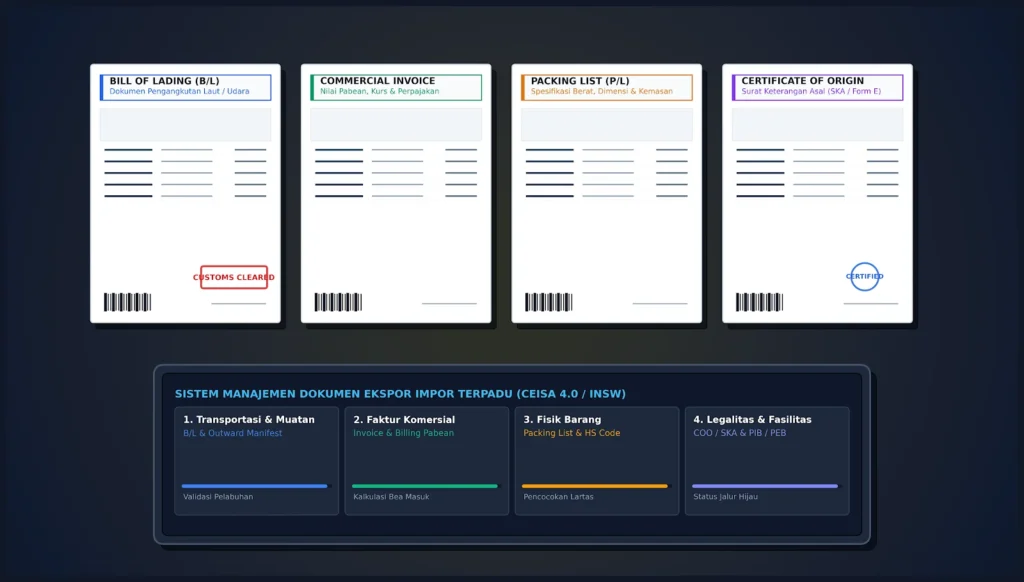
The question “What import documents are required?” doesn’t have a single answer that applies to every type of goods.
In general, importers may need to handle documents such as:
- commercial invoice;
- packing list;
- bill of lading or air waybill;
- certificate of origin;
- certain licensing documents;
- as well as customs documents and other supporting documents.
These requirements may vary based on the commodity, trade arrangement, mode of transportation, and regulations in effect at the time of the transaction.
Since regulations can change, companies should check the latest requirements before shipping rather than relying solely on an import PDF or outdated materials found online.
General Export and Import Procedures
Although the details may vary from one transaction to another, the international trade process can be broadly outlined as follows:
Transaction → Goods Preparation → Document Preparation → Transportation → Customs Clearance → Delivery → Receipt
At the documentation stage, transaction data needs to be collected and checked before it is used in the next step.
For companies with a low shipping frequency, the process may still be manageable manually. However, as the number of shipments grows, so does the administrative workload.
Imagine entering the same data repeatedly for invoices, packing lists, shipments, internal reports, and other systems. This is when export-import documentation starts taking up time and becomes prone to human error.
Why Can Managing Export and Import Documents Be Such a Hassle?
The complexity usually doesn’t come from a single document, but from the amount of data that needs to stay consistent across different processes.
For example, a change in the quantity of goods or shipment details may require updates to several documents and systems at once.
If each process is handled manually, the team has to:
- entering data;
- preparing documents;
- double-checking information;
- send or upload documents;
- making corrections if there are changes;
- ensuring data remains consistent across systems.
The higher the transaction volume, the less efficient this way of working becomes.
How Does Technology Help with Export and Import Administration?
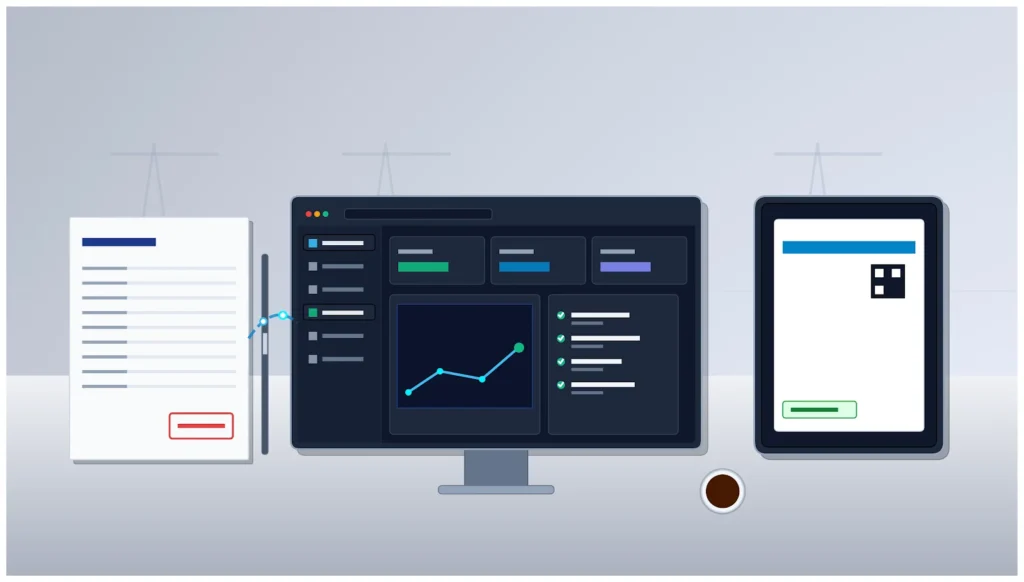
Digitalization can reduce repetitive work by connecting transaction data and operational processes in one system.
Instead of entering the same data repeatedly, existing information can be reused for other processes as needed.
Oaktree offers export-import software designed to help companies manage the process in a more integrated way.
Oaktree’s system is integrated with Accurate, CIESA, SAP ERP, Odoo, and companies’ internal systems, so data doesn’t have to be transferred manually from one application to another.
With this integration, tasks such as managing transaction data and documentation can be made more structured and automated based on the system configuration. As a result, the team can reduce repetitive administrative work and focus more on monitoring shipment processes.
Reduce the Complexity of Export-Import Administration
The more shipments you handle, the harder it is to rely on spreadsheets and manual data entry to keep all documents consistent.
Oaktree helps integrate import-export processes with the business systems a company already uses, including Accurate, CIESA, SAP ERP, and internal systems, enabling data and document management in a more structured workflow.
Want to see how Oaktree can support your company’s import-export operations? Try the app for free.
[oak_banner style=”1″ url=”https://www.oaktree.id/ads/?utm_source=blog&utm_medium=internal&utm_campaign=article” title=”See How Technology Can Solve Import-Export Complexities” cta=”Try the App for Free”]
For companies with high transaction volumes, using integrated software like Oaktree can help reduce manual work, connect existing systems, and bring greater structure to import-export management.