Understanding Demurrage and Detention Made Easy

D & D, or better known as Demurrage and Detention, is a term commonly used in the trading industry by importers, exporters, and logistics providers.
People often get confused about the difference between the two. However, these fees can have a significant impact on customers if they fail to take steps to avoid substantial charges.
Demurrage and Detention cases occur more often in imports, although they also arise in exports, albeit much less frequently.
Although Demurrage and Detention may seem like a single, inseparable concept, there are actually substantial differences between them.
For a clearer picture of Demurrage and Detention—including why these fees are charged, who receives the bill, who is responsible for paying it, and tips for minimizing Demurrage, Detention, and storage costs—read on.
Getting to Know Demurrage
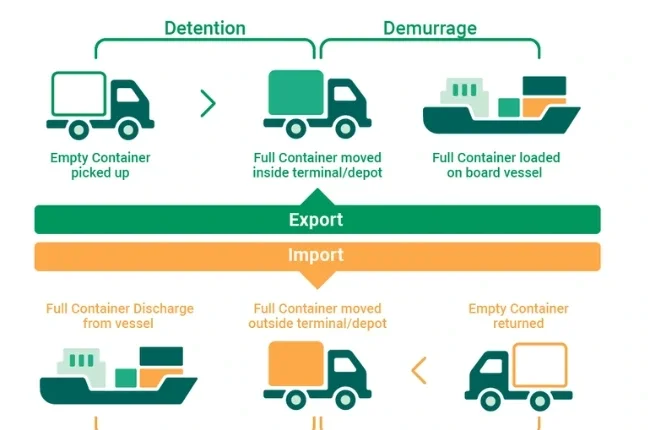
Demurrage is a fee charged by a shipping line to an importer when a container has been discharged from a vessel but has not yet been picked up, unpacked, and emptied within the stipulated free-time period.
The term Demurrage applies when cargo is still inside the container, either because it has not yet been unpacked (in the case of imports) or because the container is still empty (in the case of exports).
For example, imagine a container discharged from a vessel on January 1 and picked up by the consignee on January 11. If we assume the shipping line offers 7 days of free time from the date of discharge, the free-time period would end on January 7, which differs from the port's free time.
That leaves a difference of 11 days minus 7 days, or 4 days over the free-time limit. Therefore, the shipping line will charge the consignee Demurrage for 4 days (from January 7 to 11) at a predetermined rate.
So, What Is Detention?
Detention, on the other hand, is a fee charged by a shipping line to an importer when a loaded container is ready to be unpacked, but the empty container is still being held and has not been returned within the allotted time.
The term Detention is used when the container is empty, either after it has been unpacked or before it has been loaded.
You may be able to negotiate and ask the shipping line for one extra day as a grace period. The question usually comes down to whether the request is for Demurrage or Detention, since it is important to determine whether the container will be held before or after it is moved out of the port.
However, note that definitions of Demurrage and Detention often vary from port to port, so the shipping line should clarify the details accurately. Generally, shipping lines offer a free-time period that covers Detention, and rarely offer a special period for Demurrage or Detention alone.
Why Companies Charge Demurrage and Detention Fees
Container-related costs, including maintenance, leasing, and repairs, account for around 20% of total shipping operating costs. Like fleets and vessels, containers generate revenue only when they are moving; when they are idle, they incur costs.
Based on the previous example, a container held for 11 days does not contribute to revenue during that period. By charging Demurrage and Detention fees, shipping lines offset lost revenue from vessels sitting idle while still carrying cargo.
5 Ways to Minimize Demurrage, Detention, and Storage Fees
To reduce Demurrage, Detention, and storage costs, consider the following steps:
- Ensure your cargo is ready on time to avoid detention charges.
Make use of the available window by preparing the shipment before the empty container reaches the recipient’s location. This will help ensure the goods are ready, make loading more efficient, and get the container to the port before the free time expires. - Learn more about customs regulations to reduce Demurrage and storage costs.
- Work with the right shipper to handle customs matters, and prepare the documents needed for import permits before the container arrives at its destination port.
- Make the most of a Freight Forwarder's expertise. Plan the shipping route, choose a shipping line that fits your budget, find competitive storage solutions, manage documentation, and complete key administrative steps.
- Make sure the quote includes detailed information about Demurrage, Detention, and storage rates. Communicate proactively with all relevant parties to ensure everyone receives the information and the schedule can be customized.