Will Drones Change the Future of Logistics and Delivery?
 Oaktree.id9 min read
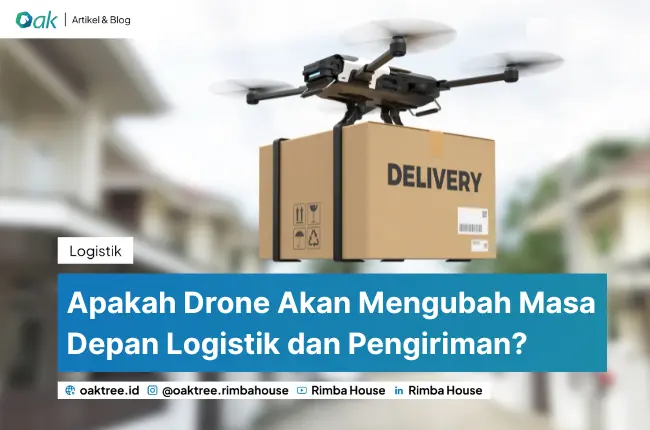
In recent years, drones have become more than just devices for hobbies or aerial photography. This technology is making its way into the world of logistics and delivery, offering speed, efficiency, and flexibility that were previously difficult to achieve using conventional methods. From major retail companies to logistics startups, many are now racing to develop drone delivery services to shorten delivery times, reach remote areas, and cut operating costs.
But an important question arises: will drones truly change the future of logistics and delivery? Despite their tremendous potential, a number of challenges remain, including flight regulations, safety, payload limitations, and public acceptance. This article takes an in-depth look at the opportunities and obstacles, and explores how drones could reshape global supply chains in the years ahead.
[irp posts=”3131″ ]
What Is a Drone?
A drone, or Unmanned Aerial Vehicle (UAV), is an aircraft with no pilot on board that is controlled remotely or can even fly autonomously using digital navigation systems. Equipped with cameras, sensors, and GPS, drones were initially used for military purposes and mapping, but have since evolved into multifunctional devices used in photography, security, agriculture, and infrastructure management.
However, as drones enter the world of logistics, their features and technology are becoming more specialized. Logistics drones are designed not just to fly and capture images, but to perform a crucial task: transporting and delivering goods quickly, safely, and efficiently. This is where the difference between conventional drones and logistics drones becomes clear.
While conventional drones are generally used for entertainment or documentation, with limited payload capacity and flight time, logistics drones have a larger payload capacity, longer-lasting batteries, and a much greater flight range. They also feature advanced navigation technologies such as AI route planning, advanced obstacle avoidance, radar, and automated delivery mechanisms that allow them to drop off or place packages precisely.
In addition, logistics drones are designed to be more aerodynamic and durable, with structures that can withstand changing weather conditions and carry specialized package containers. Because they operate in public areas and carry valuable goods, logistics drones must also meet stricter safety standards, including aviation regulations, digital identification systems, and more structured flight path controls.
Overall, the main differences between the two lie in their function, capacity, technology, and regulations. Standard drones support only light activities, while logistics drones are purpose-built to support modern delivery operations that are fast, efficient, and able to reach locations that conventional couriers struggle to access.
[irp posts=”3146″ ]
The Development of Drone Technology in Logistics
Drone technology has evolved rapidly since it was first introduced. Initially used for military purposes and aerial photography, drones are now beginning to play an important role in the logistics industry. This progress has been driven by advances in batteries, sensors, navigation systems, and artificial intelligence (AI), which allow drones to fly longer, navigate complex routes, and make deliveries autonomously without direct operator supervision.
As demand for fast delivery and supply chain efficiency grows, many major logistics companies and innovative startups are developing drones specifically for package delivery. For example, Amazon Prime Air and JD Logistics have conducted drone delivery trials in select areas, while Zipline focuses on using drones to distribute medicine and medical supplies in remote regions.
This development not only creates opportunities for fast last-mile delivery, but also drives innovation in drone design, including increased payload capacity, longer flight ranges, automated delivery systems, and integration with warehouse and digital tracking technologies. As a result, drones are no longer just experimental technology—they’re becoming a real part of the transformation of modern logistics.
[irp posts=”3127″ ]
The Advantages of Drones in Modern Delivery Systems
Using drones in logistics offers a range of advantages that could revolutionize how goods are delivered. One of the key benefits is delivery speed. Drones can bypass traffic congestion and reach areas that are difficult to access by road, allowing packages to arrive faster than with conventional couriers. This is especially useful for last-mile delivery, where speed and precision are key to customer satisfaction.
Drones can also help reduce operating costs. By reducing reliance on ground vehicles and human labor for certain routes, companies can save on fuel, time, and logistics costs. Drones can also reach remote or hard-to-access areas, such as mountainous regions, small islands, or disaster-affected locations, which typically take more time and cost more to reach using conventional transportation.
Other advantages include more efficient route management thanks to advanced navigation technology and AI, as well as the ability to make deliveries autonomously with a high degree of accuracy. Some logistics drones can even integrate with warehouse systems, streamlining the fast, organized pickup and delivery of goods.
With all these advantages, drones not only speed up deliveries but also improve overall supply chain efficiency, making them an innovative solution to the challenges of modern logistics.
[irp posts=”3089″ ]
Limitations and Challenges of Using Drones in Logistics
Although drones offer a range of advantages in logistics, the technology still faces limitations and challenges that need to be considered. One of the main limitations is payload capacity. Most logistics drones can carry only a few to a few dozen kilograms, so they cannot yet fully replace traditional delivery vehicles for large or heavy items.
Battery life and flight range are also constraints. Many drones still have limited operating times, typically between 30 and 60 minutes, so they need to be recharged or have their batteries replaced for longer routes. This limits delivery efficiency, especially in large areas or those with many delivery stops.
Drones also face weather and environmental challenges. Strong winds, rain, and other extreme conditions can disrupt flight stability and may even damage the drone and the packages it carries.
Safety and privacy are also concerns. Drones flying in public areas can pose risks of accidents, package theft, or invasions of public privacy. Strict flight regulations and mandatory safety procedures must be followed to minimize these risks.
Finally, the upfront investment in logistics drones and supporting infrastructure is still relatively high, especially for smaller companies and logistics startups. Integrating automated navigation systems, route management software, and battery charging stations requires additional capital before implementation can run optimally.
By understanding these limitations, companies can develop realistic strategies for using drones and ensure the technology serves as an effective complement to delivery systems, rather than merely an experimental solution.
[irp posts=”3093″ ]
The Economic and Operational Impact on the Logistics Industry
Implementing drones in logistics not only speeds up deliveries but also brings significant changes to the industry's economics and operations. One of the main impacts is lower operating costs. By using drones for short-distance deliveries or to reach hard-to-access areas, companies can reduce their reliance on ground vehicle fleets and human couriers, saving on fuel, vehicle maintenance, and labor costs.
In addition, drones improve supply chain efficiency. With the ability to make automated deliveries and integrate with warehouse management systems, companies can shorten distribution times, reduce the risk of delays, and improve delivery accuracy. This directly affects customer satisfaction and the company’s reputation.
From a macroeconomic perspective, drone adoption also creates new business opportunities. For example, startups focused on drone delivery services may emerge, while conventional logistics companies can offer premium drone-based services for express packages or special requirements. However, there may also be an impact on workforce structures, as some traditional jobs, such as couriers or drivers, may decline, while skilled workers are needed to operate and maintain drones.
Overall, the use of drones in logistics drives efficiency, lowers costs, and creates more flexible operating models. Even so, companies need to balance the economic benefits with upfront investment, regulations, and workforce training to ensure a smooth transition to drone-based systems.
[irp posts=”3062″ ]
Public Perception and Social Challenges of Logistics Drones
Beyond technical and operational considerations, the use of drones in logistics also faces social challenges and public perception issues. Many people welcome this technology enthusiastically because of its promise of fast delivery and greater efficiency, but there are also concerns about privacy, safety, and environmental disruption. Drones flying over residential or public areas can cause discomfort, noise, or concerns about unauthorized surveillance, raising privacy issues.
People also often question package security and the risk of accidents. A drone that crashes due to technical failure, extreme weather, or navigation errors could endanger people and property below. These concerns make regulations and safety procedures essential to ensuring the public feels safe with drones in operation.
Another social challenge is unequal access and the digital divide. Drone delivery services are likely to be available only in major cities or certain areas at first, leaving some communities unable to benefit. This could lead to perceptions of unfairness in the distribution of technology.
To address these challenges, logistics companies need to communicate clearly with the public, be transparent about flight routes and data use, and educate people about the benefits and safety of drones. This approach is essential to ensuring that drone innovation in logistics is widely and sustainably accepted without triggering significant social resistance.
[irp posts=”2981″ ]
Optimize Your Logistics Efficiency with Oaktree Software
The use of drones in logistics has opened up new opportunities for fast, efficient deliveries to hard-to-reach locations. However, making the most of this technology requires an intelligent, integrated management system. That’s where Oaktree software comes in.
With Oaktree, companies can track every drone delivery in real time, automatically optimize routes, and ensure packages arrive on time with greater security. Oaktree also enables full integration across drone fleet management, warehouse operations, and distribution systems, helping the entire supply chain run more efficiently and smoothly.
Oaktree not only boosts productivity and delivery accuracy, but also helps companies lower operating costs, minimize risk, and provide customers with a better delivery experience. By combining drone innovation with Oaktree’s logistics management expertise, your business is ready to tackle the challenges of modern logistics and set a new standard for fast, effective delivery.
[irp posts=”2978″ ]
Conclusion
Drones have ushered in a new era in logistics, offering fast, efficient delivery and the ability to reach hard-to-access areas. Despite challenges such as payload capacity, battery life, weather, and regulations, this technology offers significant opportunities for operational efficiency and business innovation.
With the support of management software like Oaktree, delivery tracking, route optimization, and fleet management become easier, ensuring drones can be used to their full potential. Overall, drones aren’t just futuristic devices—they’re practical solutions ready to transform the future of logistics and delivery.